

Kluuvikatu 3 – The unique story of Fazer’s commercial building
22.8.2025
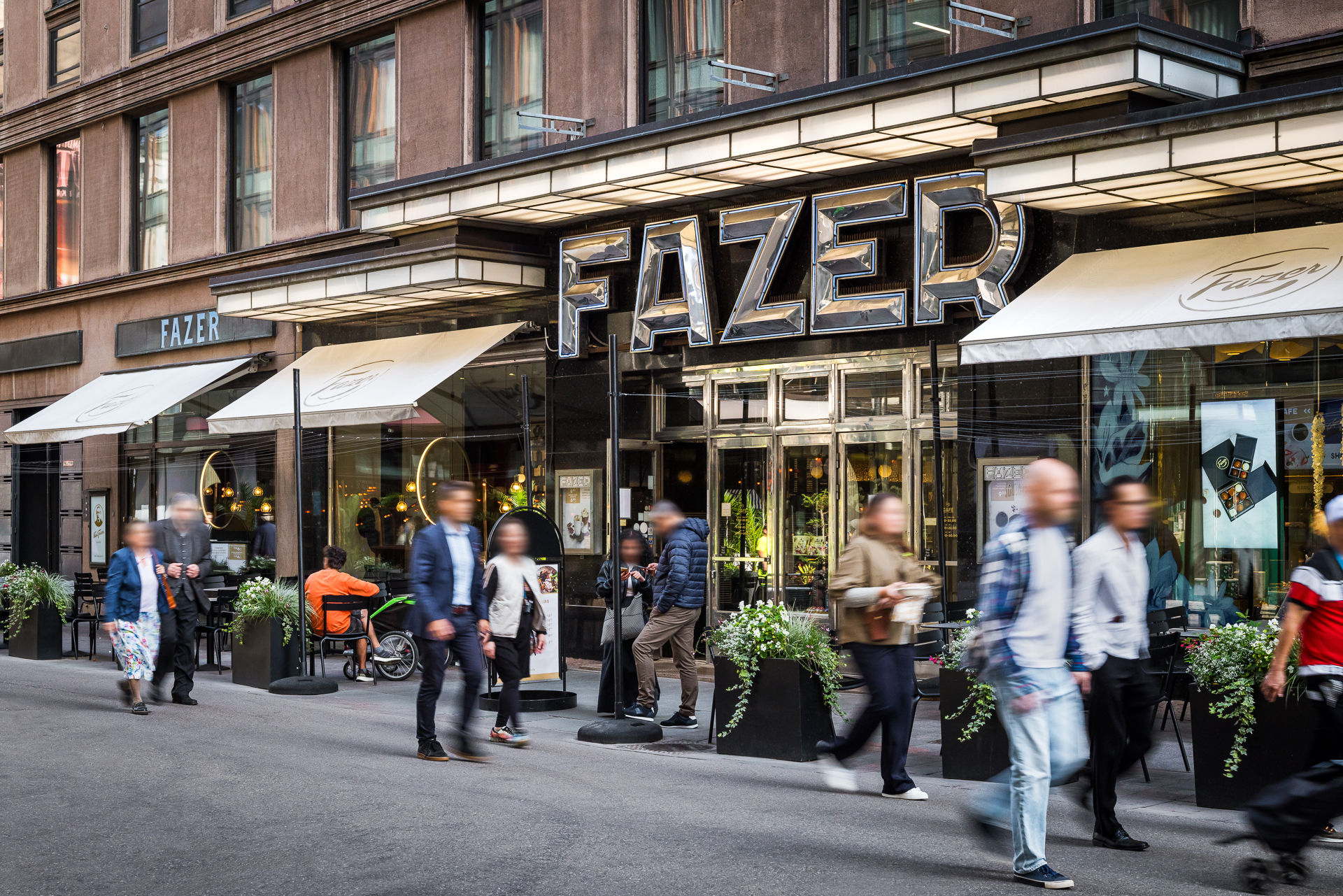
Kluuvikatu 3 stands out as a unique piece of Helsinki’s built cultural heritage and one of the earliest commercial streets in Finland. Commissioned by Karl Fazer and designed by Gösta Juslén, the seven-story property was completed in its central location in 1930. For nearly a century, the building has provided a distinguished setting for the success stories of business life.
Prestigious office spaces to facilitate Fazer’s growth
When completed, the new Fazer commercial building replaced an earlier stone building on the site. The larger property allowed Fazer to consolidate its operations under one roof. Soon, the bakery, store, café, and office occupied different floors of the building.
The ground floor also included rental retail spaces, further enriching the range of services available in the neighbourhood.
In the thriving centre of Helsinki’s corporate scene
Over the years, the property got a new owner and was renovated to the needs of new tenant companies. Upscale office spaces were developed on the upper floors, and over time the building became home to both global growth companies and renowned expert organizations. Many of these tenants have remained in the building for years – some even for decades.
Fazer also maintains a presence in the building through Fazer Café Kluuvikatu 3, which still remains a vivid social hub for citizens. It also serves as a high-quality option for tenants’ catering, lunch, and coffee needs.
An architectural gem
The Kluuvikatu 3 property is an architecturally significant building, elegantly combining 1920s classicism with Art Deco influences. The first-class materials have stood the test of time – for example, the entrance is still adorned with its original marble surfaces.
Also, the façade beautifully showcases the craftsmanship of its era. Its distinctive appearance comes from the interplay of strong vertical and horizontal lines, with a hand-carved plaster finish adding structure and class. In the 1930s, a large team of skilled plasterers worked on the façade, and the same traditional methods were preserved in later restoration projects.
Interested in this historic landmark?
Read more about the history of the site on the website of the National Board of Antiquities.